August 6, 2026 · Graham Saathoff, founder
Introducing retail & e-commerce in bsns, built with Forrests Music
Today we're announcing retail and ecommerce support in bsns.
That includes a shared product catalog, inventory, point of sale, online ordering, purchasing, rentals, repairs, trials, and customer history.
But the important part is not that bsns now has a register and an online store. They are part of the same business.
A sale at the counter updates inventory and customer history. The online store uses the same products, prices, and stock counts. A rental, repair, or trial stays connected to the customer, the item, the agreement, the conversation, and any work that still needs to happen.
You do not have to piece together one system for the shop, another for ecommerce, another for customer communication, and several more for everything that happens after the sale.
The shop does not become another silo.
One business, not another integration project
When I unexpectedly took over operations for several family businesses, I inherited more than $30,000 a year in software.
Most of the individual products worked. The booking tool booked. The contract tool collected signatures. The accounting system kept the books.
The trouble was everything between them.
Customers were in one app, appointments in another, agreements in a third, and invoices somewhere else. Work was handed off in chat. Expenses arrived by email. When a date, price, or promise changed, someone had to find every copy and update it.
When the systems disagreed, the owner had to work out what was true.
I started building bsns so the business would no longer depend on its owner's memory.
Retail makes that idea much more complete.
A business can now manage service work, appointments, projects, contracts, messages, invoices, products, inventory, counter sales, and online orders without splitting its operation across disconnected systems.
That matters especially for businesses that do more than one thing: a music shop that sells, rents, repairs, and teaches; a bicycle shop that sells products and performs service; or a contractor who manages projects but also sells materials and parts.
More of the business means a more useful Wren
Wren, the built-in assistant in bsns, is only as useful as the information it can understand.
In a standalone point-of-sale system, an assistant may know what was sold. In bsns, Wren can also understand the customer, the conversation, the agreement, the related work, the inventory, and the money around that sale — subject to the access you give it.
That gives Wren a much richer operational picture.
You can ask what has fallen below its reorder point, what is overdue, what is holding up a job, or which customer needs a follow-up. Wren can combine information from across the business, explain what it found, and help with the next step.
The goal was never to bolt a chatbot onto a collection of apps. It was to give the business a shared memory — and then give its owner a useful way to ask questions of it.
Built with a real shop
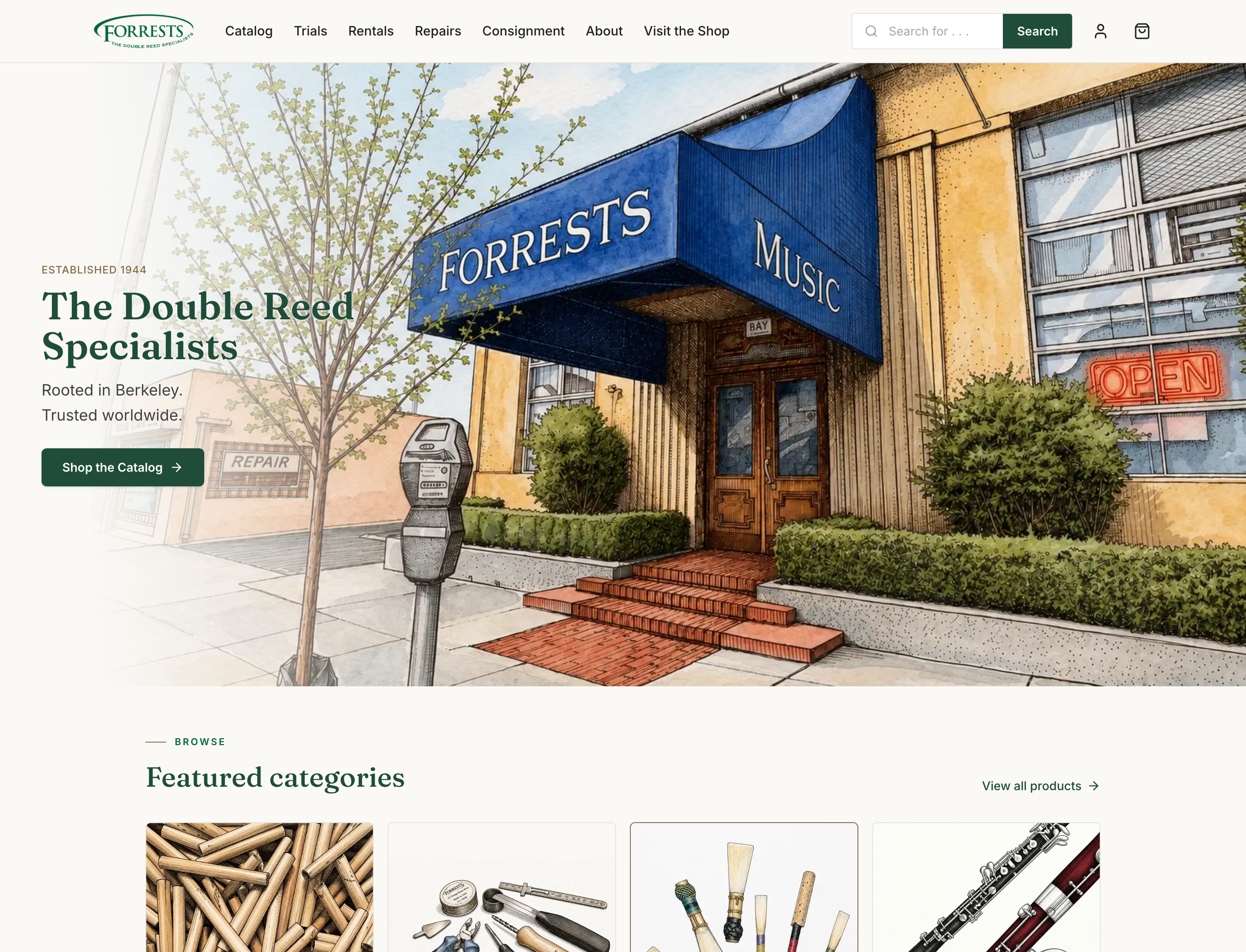
We developed and tested these capabilities with Forrests Music, a specialty double-reed shop that had spent decades operating on a heavily customized FoxPro system.
This summer, Forrests moved 36 years of history into bsns, including:
- 112,954 customers
- 474,670 sales
- 1.7 million line items
- Nearly 5,000 instrument trials
- 17 years of rental-payment history
The same catalog now supports the counter, stockroom, rentals, and online store.
As Cynthia Hanson, owner of Forrests Music put it "bsns.cc was able to do in 3 weeks what others couldn't do in 3 years."
The value was not just preserving old records. Once that history became usable, it revealed things the old reports had missed, including a years-long price freeze on house-made products and a growing recurring-revenue line that had never appeared clearly in the reports the owner relied on.
That project reinforced something I believe strongly: implementation is not an inconvenience before the product begins. Understanding the business, moving its history, and helping the team work differently are part of the product.
We're opening the door wider
bsns is still early, and onboarding will remain deliberately high-touch.
We start by understanding what the business is trying to accomplish, how it operates today, what history needs to come along, and where information keeps falling through the cracks. Then we help move the data, configure the workflows, and train the people who will use them.
My standard is straightforward: if a business is not better run six to twelve months after adopting bsns, something has gone wrong.
bsns may be a particularly good fit if your business:
- sells products in a shop and online
- combines retail with repairs, rentals, trials, or service work
- runs projects, appointments, or recurring work alongside product sales
- has useful history trapped in an old system; or
- has quietly made its owner the integration layer between all its software
Bring us the messiest workflow in your business. We'll show you what it could look like when the customer, the work, the products, the conversation, and the money stay together.