Your business shouldn’t live in your head.
bsns keeps your customers, schedule, tasks, messages, contracts, invoices, and expenses together. Enter something once, and it stays up to date everywhere your team needs it.
For service businesses
Projects, appointments, recurring work, tasks, contracts, and invoices.
For shops
Products, inventory, counter sales, online orders, repairs, rentals, and trials.
Many businesses do both. You can start with either and add the other without rebuilding the business in another tool.
Running on a system older than your employees? Talk to us about implementation ›
bsns in practice
Follow one job from first call to final invoice.
A new client books a call. When they decide to move forward, bsns drafts the agreement, opens the project, and creates the first tasks. Hours and expenses stay with the job as the team works, so the invoice is ready when the project is done.
Nothing has to be copied from one app to another. The customer, agreement, project, time, expenses, and invoice all refer to the same job.
The example here is a design studio, but the same flow works for contractors, agencies, consultants, and other service businesses.
Built with Forrests Music
- of records moved
- 36 yearsof records moved
- customers
- 112,954customers
- sales
- 474,670sales
- in under a month
- Livein under a month
See it
See what’s happening, who owns it, and where the money stands.
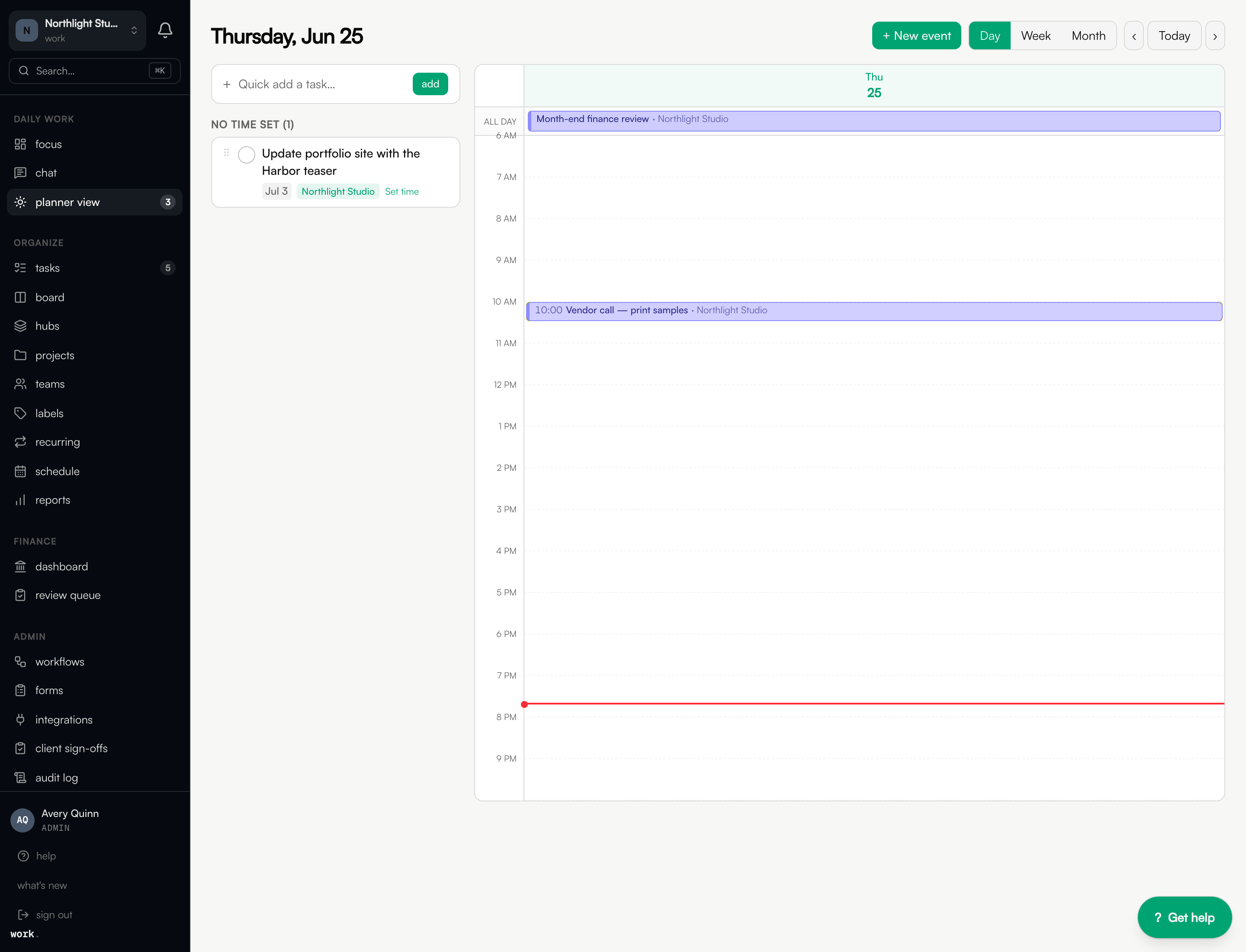
Your week
See the whole week in one place
Appointments, bookings, and scheduled tasks appear on the same calendar. Work that still needs a time stays beside it, ready to place into the day or week.
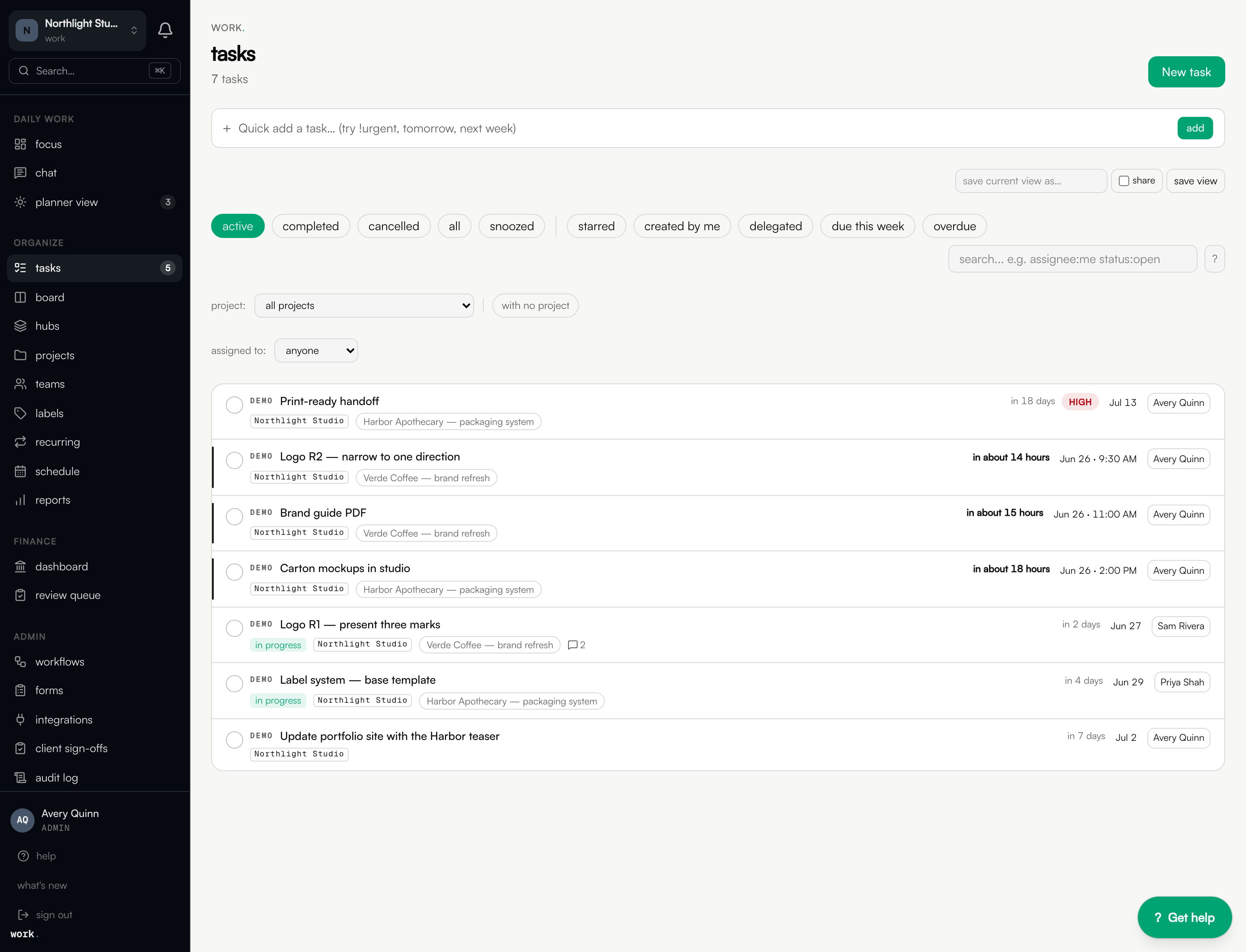
Your team
Know who owns what
See every task, owner, deadline, and status in one list. You can tell where work stands without asking the whole team for an update.
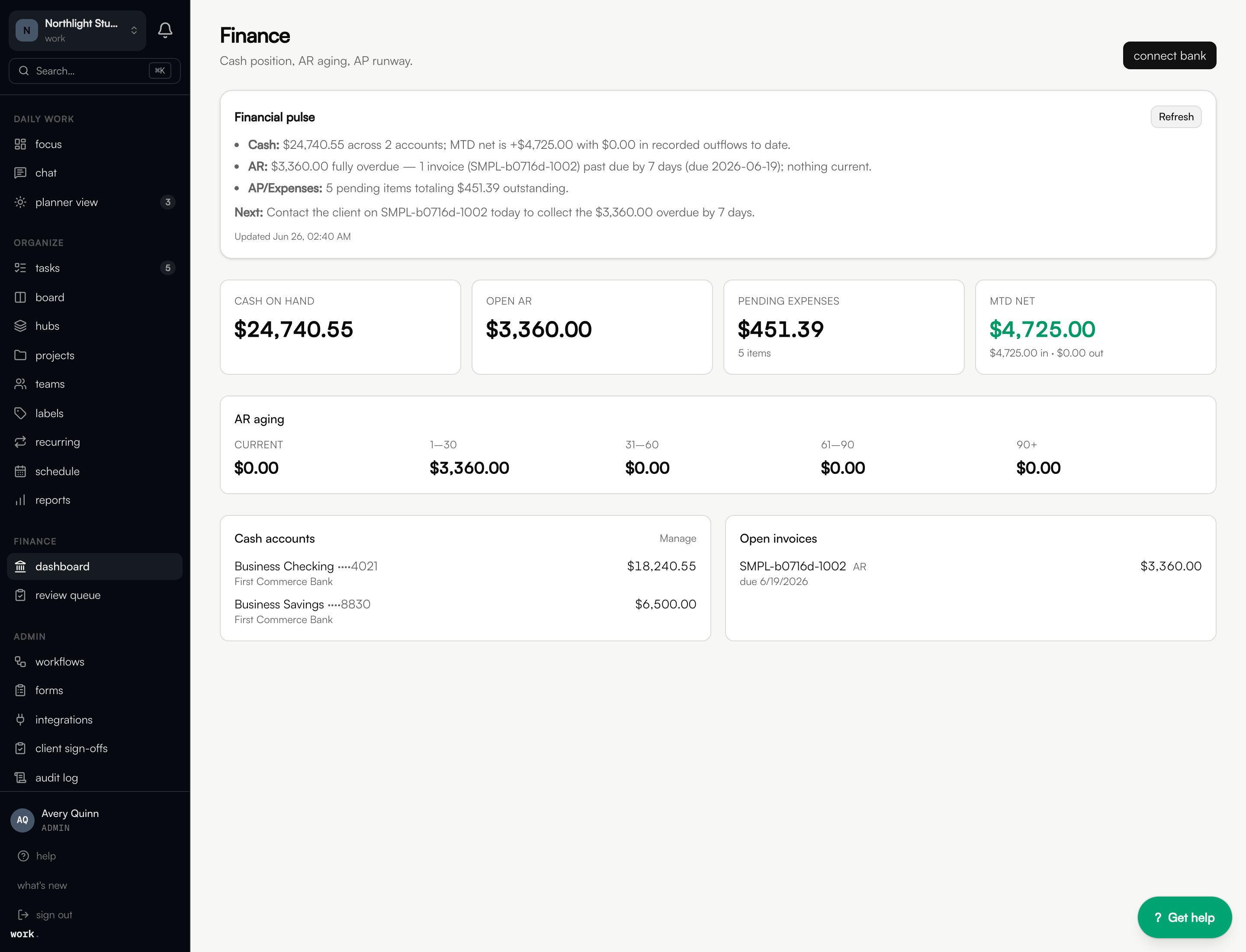
Your money
See what is owed and what has been spent
See cash balances, unpaid invoices, and recorded expenses without assembling another spreadsheet.
Your built-in assistant
Ask Wren what needs your attention.
Wren is the built-in assistant for bsns. It can use your schedule, tasks, messages, contracts, invoices, and expenses to answer questions about the business and help with the next step. Ask what is overdue, what is holding up a job, or what deserves your attention today. Wren can also draft a follow-up and wait for your approval before anything is sent.
Pick a question — each answer is Wren responding for real in the demo workspace.
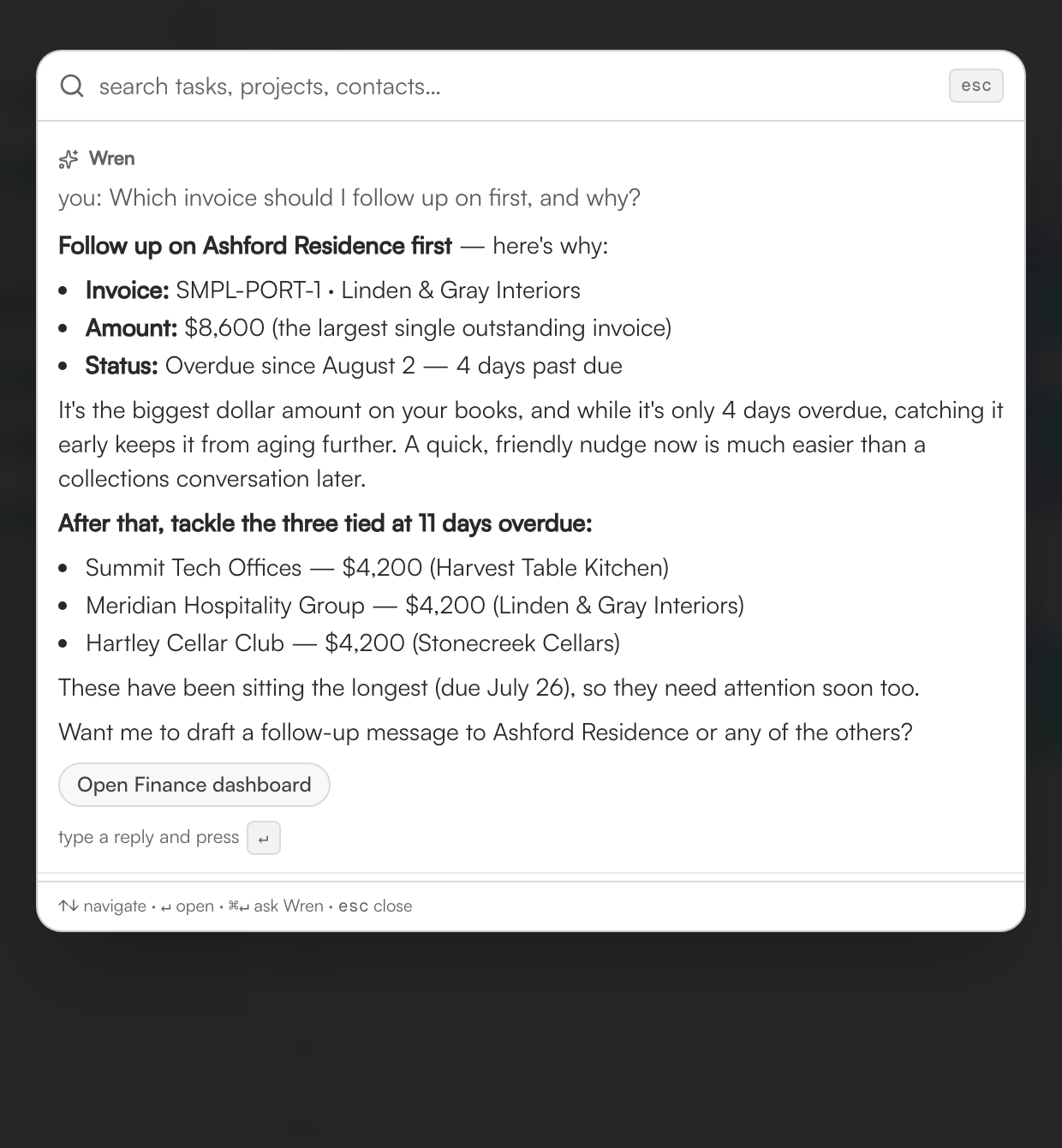
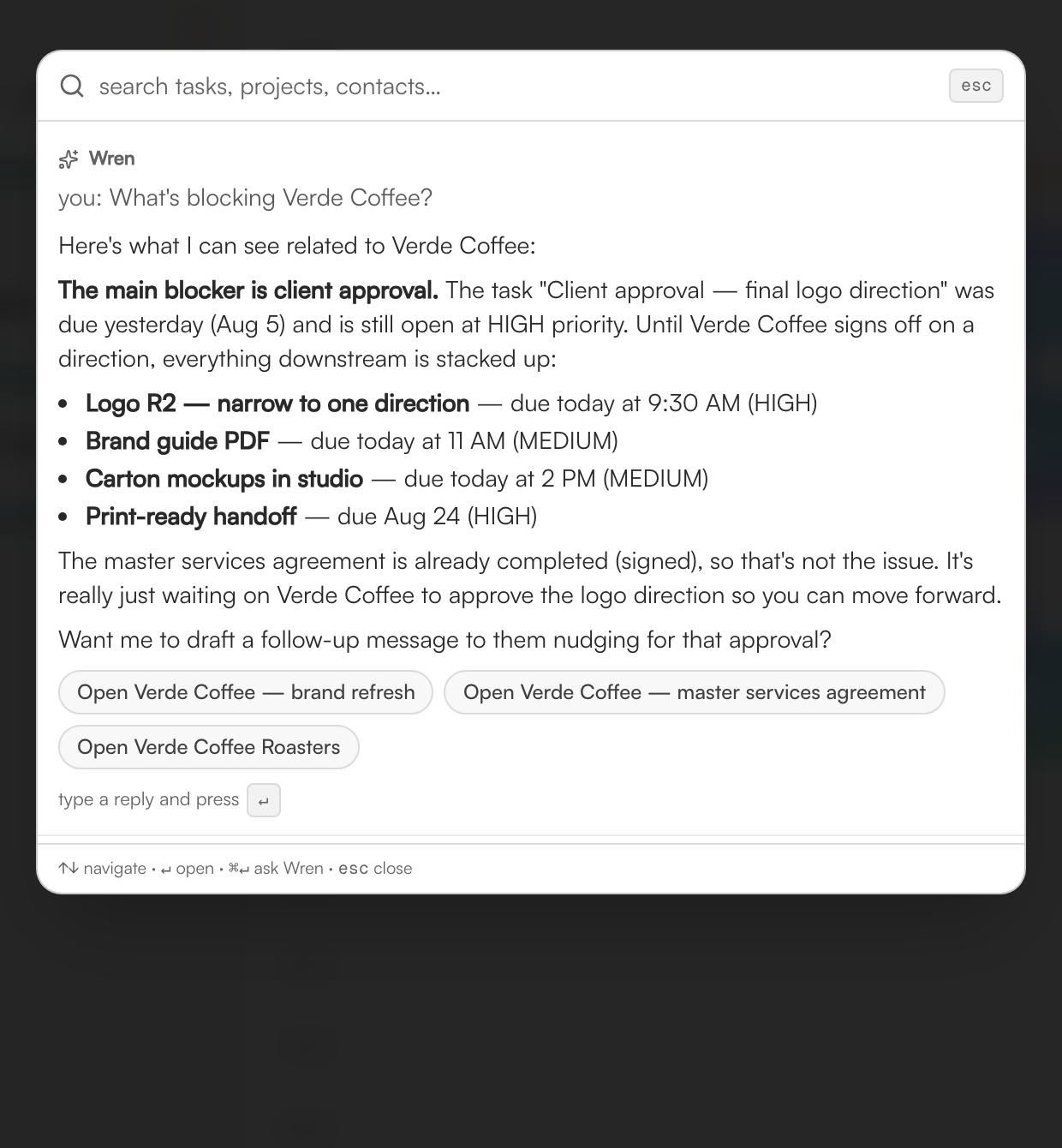
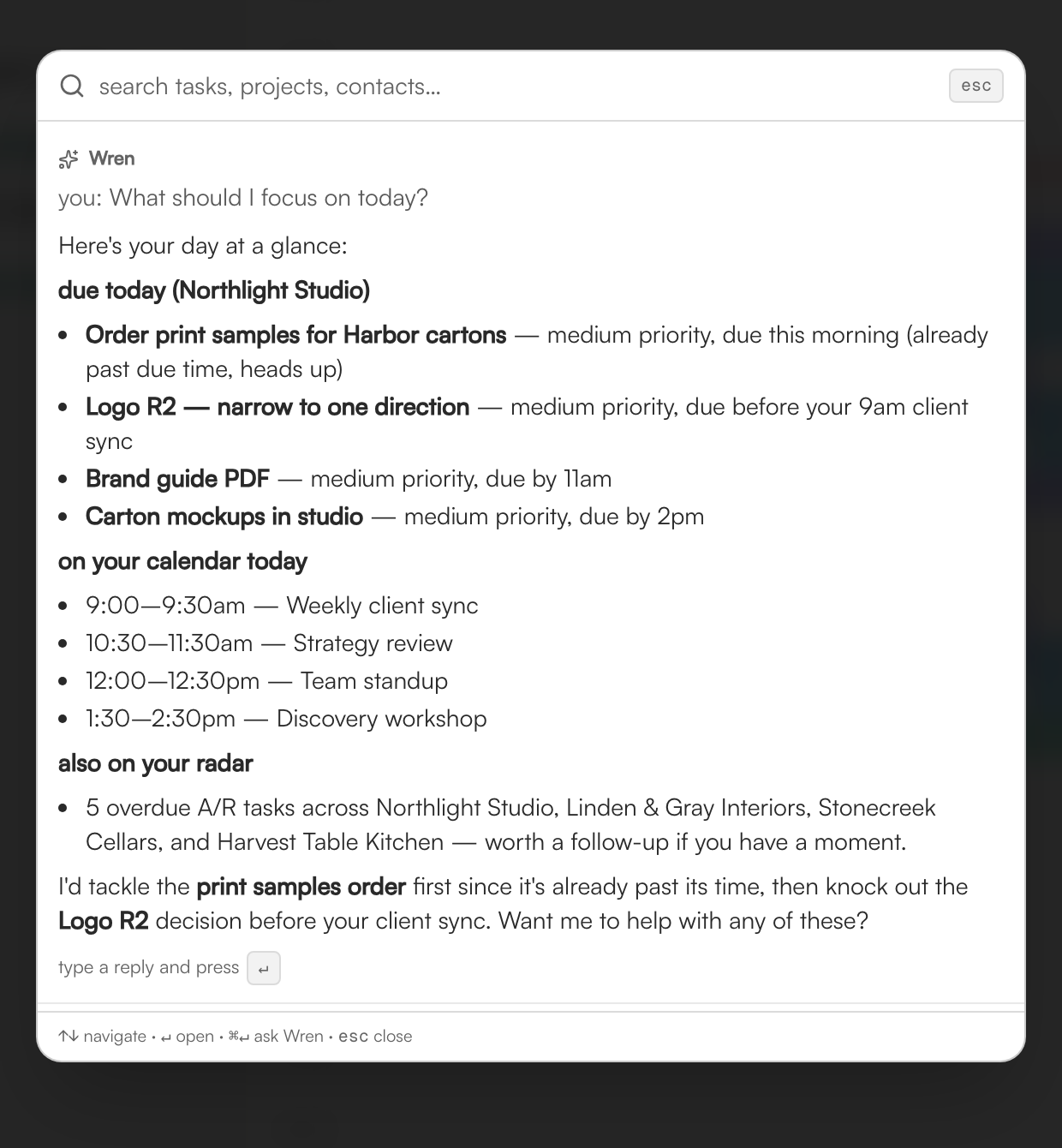
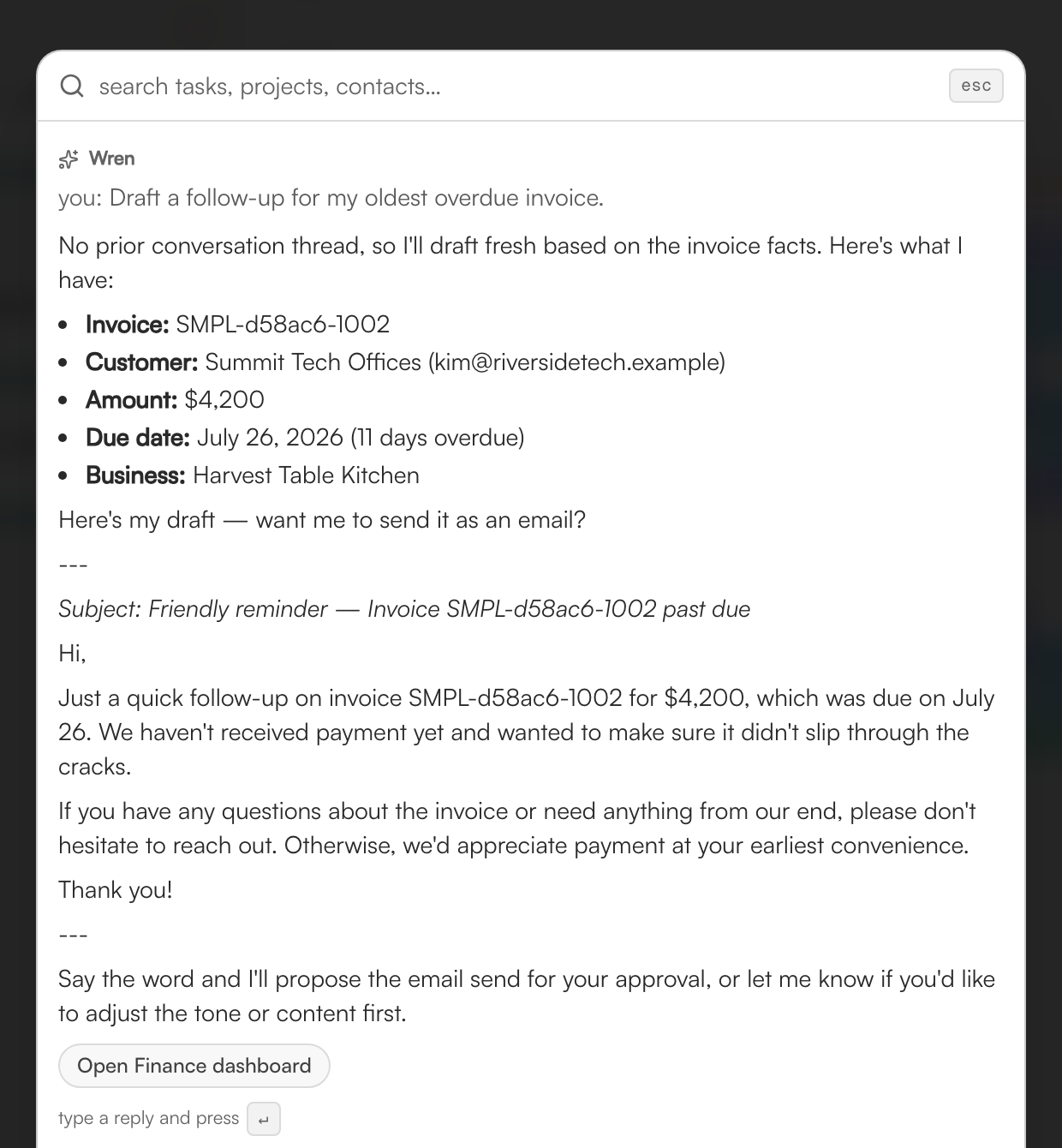
Most assistants only know what is in the app where you ask. Wren can use information across bsns, so it can answer questions that span the customer, the job, the schedule, and the money.
Built for multiple businesses
Two businesses shouldn’t mean two of everything.
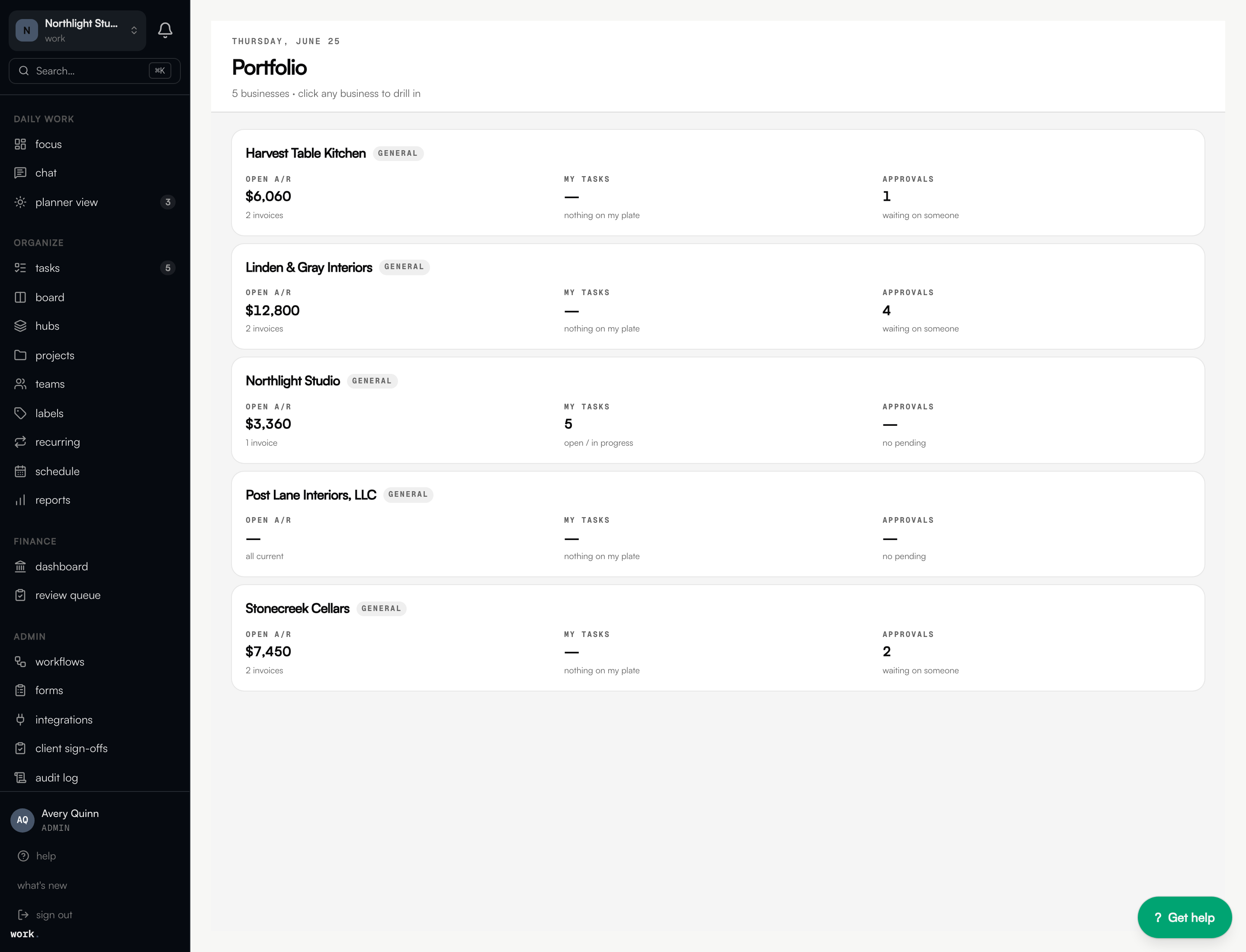
Business software is usually built around a single business. One account, one set of users, one subscription — and if you happen to run two companies that share the same people, you pay twice. For everything.
Solo includes one business. Solo+ and larger subscriptions include the first 2. Additional businesses are $49 per month. People who work across several businesses are set up once. They use one login and count as one user in each business — not a separately paid user in every company.
Each business keeps its own customers, invoices, contracts, records, and permissions. The portfolio view lets you see what is outstanding and what needs attention across all of them.
Clean separation when you need it. One view when you want it. One bill at the end of the month.
Messaging
Answer customers with the full history in front of you.
Customer emails come into one shared inbox, not an employee’s personal account. Open a conversation and you can see the customer, their orders, and the related work. Wren can draft a reply, show the information it used, and wait for your approval before anything is sent.
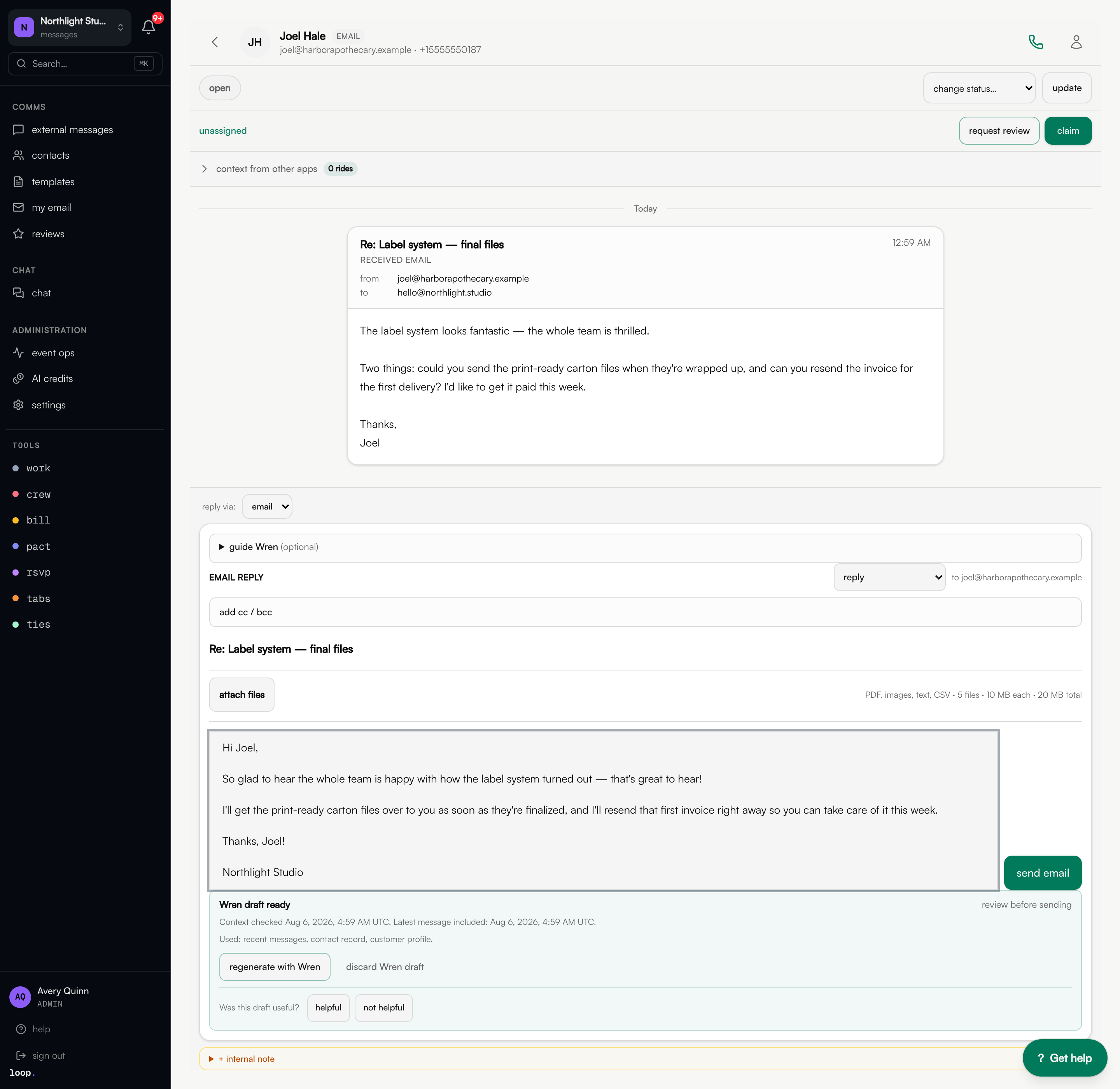
Turn a message into a task.
Assign it, change the owner, or set a deadline without leaving the conversation. The task updates for everyone, so the thread and the task never tell two different stories.
Customer conversations and team chat remain visibly separate, so you always know who will see what you write.
Watch it work
Take it with you.
Tasks, messages, contacts, and approvals are available in the mobile app too.
Why bsns exists
Because you deserve tools that talk to each other
Your customer may be in one app, the appointment in another, the agreement in a third, and the invoice somewhere else. Every change has to be copied by hand. When something falls out of sync, you are usually the one who has to find and fix it.
bsns keeps the customer, dates, work, expenses, and invoice together. Enter it once. Use it everywhere.
Every part of the business shares the same memory.
Book → agree → do the work → bill → get paid
tasks
retail
scheduling
contracts
invoicing
expenses
messaging
CRM
The bsns story
Built by someone who had to run four businesses at once.
When Graham Saathoff took over operations for four family businesses overnight, he found more than $30,000 a year in annual software subscriptions and no reliable way to see what was happening across them. The individual tools worked. The operation between them ran on memory.
He’d spent years managing infrastructure at Silicon Valley technology companies, where the connections between systems matter as much as the systems themselves. So he built bsns — first because he needed it, then because other owners did too.
The goal was never to build a better invoicing app. It was to let owners stop maintaining the system behind the business and get back to running it.
Implementation
Bring your history with you.
Moving years of customers, products, sales, and other records takes more than uploading a file. We assess the data, clean it up with your team, move it, and train the people who will use it. Implementation is quoted separately, so the work, cost, and responsibilities are clear before we begin.
Pricing
Choose a plan that fits your team.
Every plan includes the same core bsns tools. Larger plans add more users and tools for managing a larger team; they do not hide basic features behind an upgrade.
Sell products too? Add inventory, point of sale, and an online store without paying again for the same users or shared tools. See bsns for retail ›
bsns runs the operation; your accountant keeps the ledger in QuickBooks or whatever you use today.
Starter
$99/mo
2 full users
For your first teammate.
Standard
most popular$299/mo
5 full users + 10 team members
A growing team with field or part-time staff.
Scale
$599/mo
10 full users + 25 team members
A full crew across the front and back office.
A full user runs the business day to day. A team member has a lighter, lower-cost login for assigned work — tasks, time, chat, and their own expenses.
Some early customers qualify for founding-member pricing through a direct agreement. Self-serve signups receive the listed price. 30-day free trial, cancel anytime.
Trust
How we keep your business safe.
You’re bringing contracts, invoices, expenses, customer records, and internal messages into one place. Here’s what protects them.
People only see what you give them access to
Access is separated by business and enforced in the database, not only on the screen.
Sensitive credentials are encrypted
Bank connections, calendar access, and login secrets are never stored as readable text.
Signed contracts can be verified
Every completed agreement includes a tamper-evident history.
Take your data with you
Export your records whenever you need them. We do not sell your data.
Your data is yours. The trust page has the details, and live status is always public.