One catalog for the counter, stockroom, and online store.
Ring up sales, keep inventory accurate, and know what to reorder without updating the same product in three places. Every sale also builds the history that shows which products are selling, which customers return, and which prices may need another look.
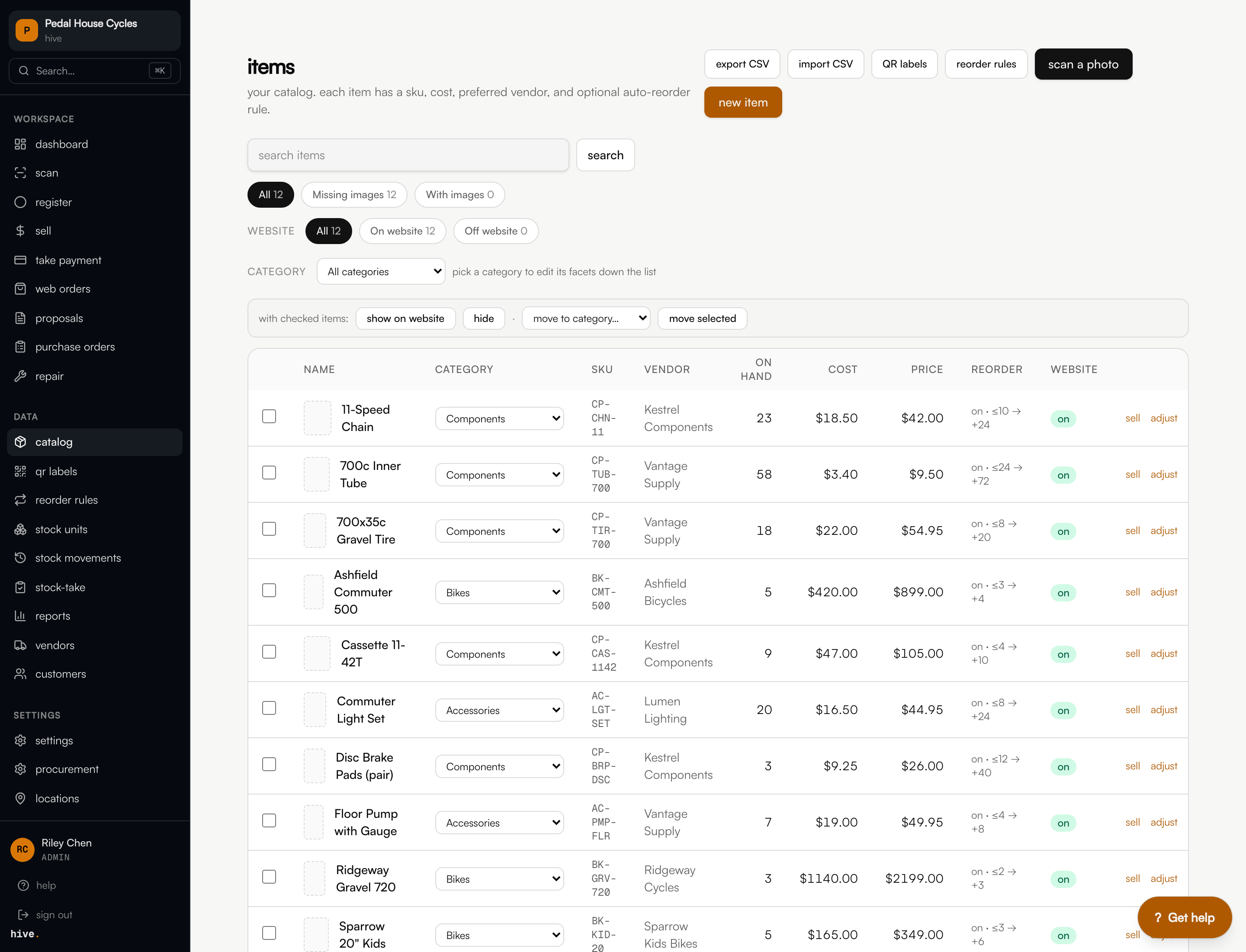
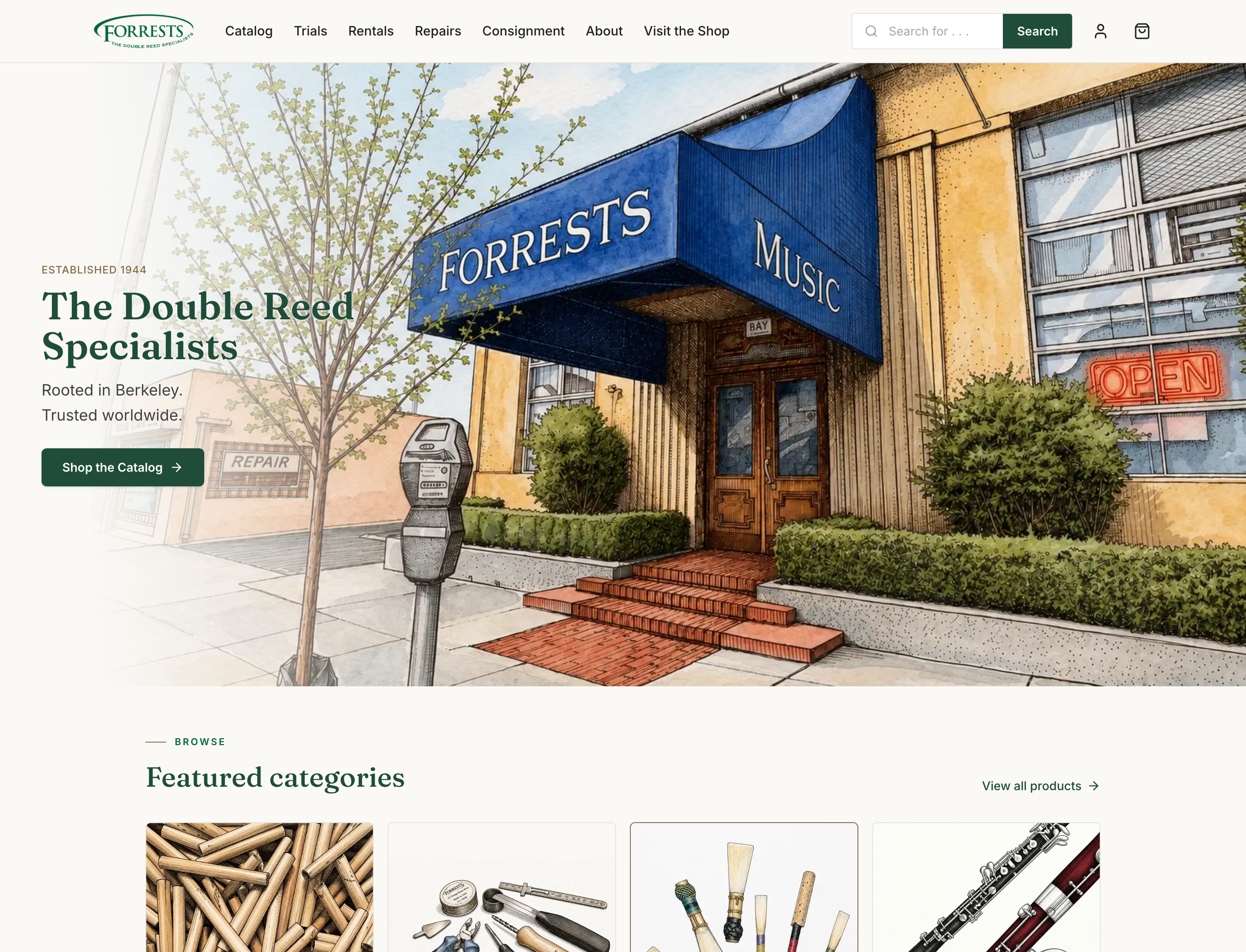
Built with Forrests Music
36 years of records, live in under a month.
Forrests Music — a specialty double-reed shop serving musicians since 1944 — moved 6,155 products, more than 112,000 customers, and 474,000 sales out of its old DOS system. Staff now use the same product information at the counter, in the stockroom, and online.
Once that history was usable, the owner found a years-long price freeze on house-made products and a fast-growing rental line that had never appeared in the old reports.
- of history
- 36 yearsof history
- customers
- 112,954customers
- sales
- 474,670sales
- preserved
- Every rowpreserved
“bsns.cc was able to do in 3 weeks what others couldn’t do in 3 years.”
What you get
Sell, track stock, and reorder from the same catalog.
Update a product once.
Name, price, cost, variants, and supplier live on one product record. The register, the online store, and the reorder list all read that record, so a change lands everywhere at once.
Every sale updates inventory.
Ring up a sale at the counter and the stock count changes immediately. Card or cash, receipts by email or paper, and a drawer that reconciles at close.
Know what to reorder.
Set a minimum once. The reorder view lists every item below it, the quantity to bring in, and the supplier it comes from — built from the same counts the register updates.
Show customers what is actually available.
The online store lists what you can actually deliver, including items that can be built from components — not just what is already assembled on a shelf.
At the counter
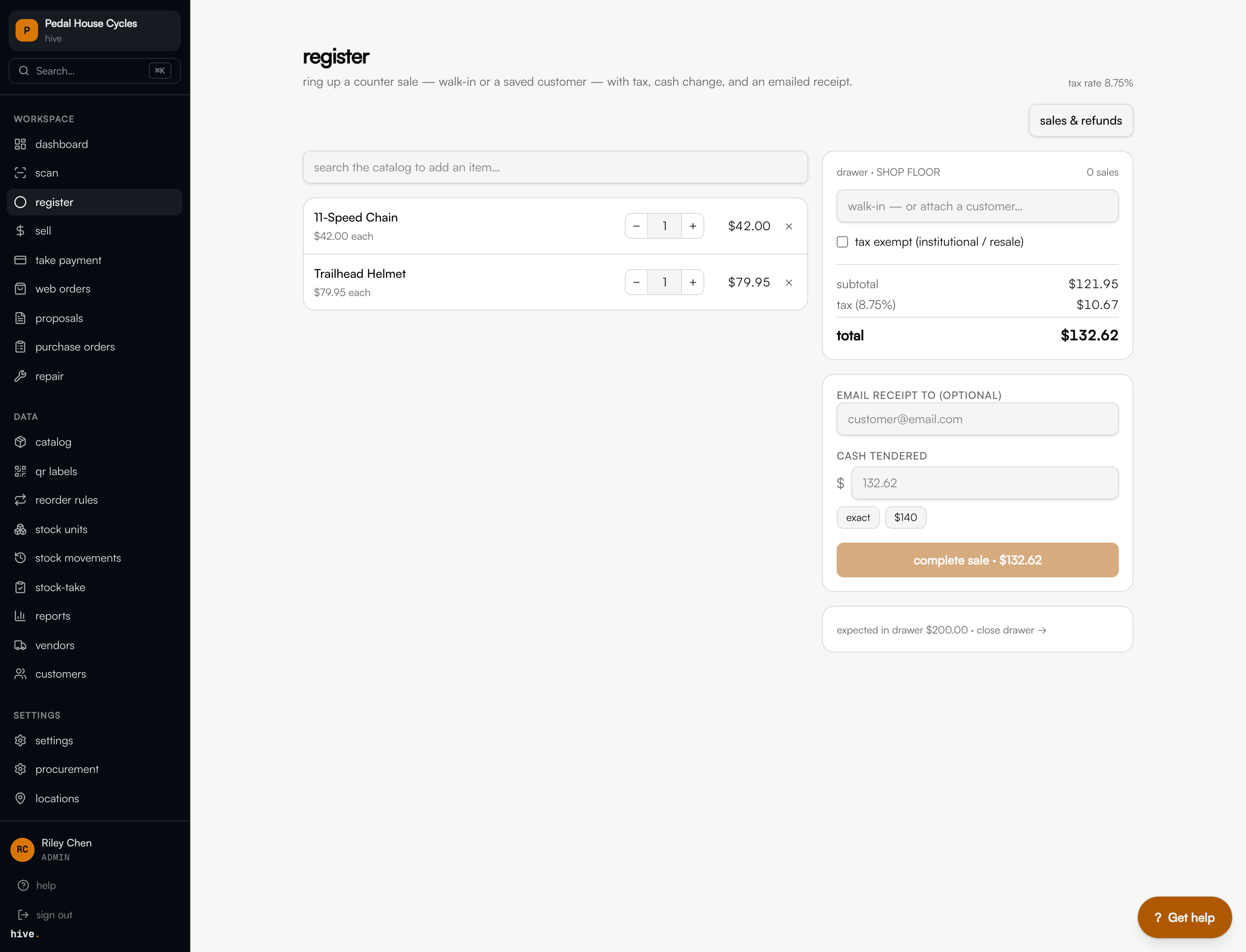
Ring it up without leaving the system
Search, ring up the sale, take payment, and send the receipt. Inventory updates immediately.
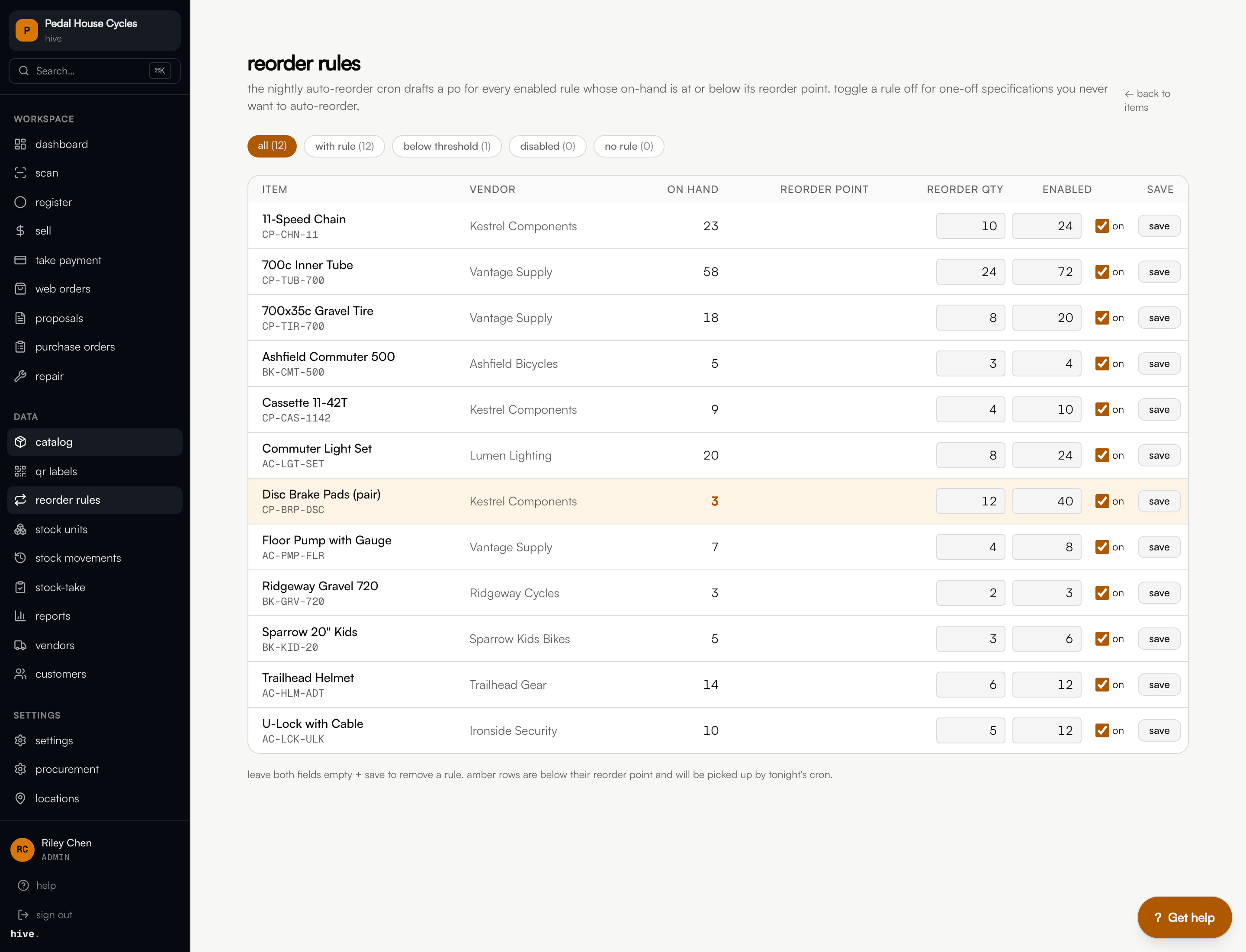
Before you run out
Know what to reorder, and from whom
See every item below its minimum, the quantity to order, and the correct supplier.
Beyond checkout
See the customer, the order, and what happens next.
Retail software usually handles the sale and the stock count. Your business still has messages to answer, rentals or repairs to manage, supplier bills to pay, and balances to collect. bsns keeps those details with the same customer and order, so you can see what happened and what still needs attention.
Customer history stays together.
Conversations, follow-ups, and past orders stay with the customer's record, so you are not digging through an inbox to reconstruct what happened.
See what the sale earned and cost.
Invoices, payment status, supplier costs, and expenses stay with the order that created them, so you can see what a sale actually earned.
Keep agreements with the item.
Rental, consignment, trial, and repair agreements are stored with the customer and the item they cover, so the terms are there when you need them.
Ask Wren about the customer or order.
Wren, the built-in assistant, can answer questions or draft a follow-up using the information you have allowed it to see.
Forrests Music currently uses the catalog, inventory, register, rentals, and online-store features described here. Other bsns tools shown on this page may be configured differently for each shop.
Pricing
Choose a plan based on your team size.
Each retail plan is its matching service plan plus $99/month for retail & inventory and $39/month for the online store. One plan, one bill.
Starter
$237/mo
For your first teammate. 2 full users.
The core bsns tools, retail & inventory, and the online store.
Standard
most popular$437/mo
A growing team with field or part-time staff. 5 full users + 10 team members.
The core bsns tools, retail & inventory, and the online store.
Scale
$737/mo
A full crew across the front and back office. 10 full users + 25 team members.
The core bsns tools, retail & inventory, and the online store.
Already use bsns for service work?
You pay once for shared tools and users. Retail is added to the same business and account.
Run more than one business?
Solo includes one business. Solo+ and larger subscriptions include the first 2. Additional businesses are $49/month, and a person who works across several businesses still counts as one user.
The online store is optional if you already use another storefront. Catalog migration, cleanup, setup, and training are quoted separately.